Is there a simple ISO 9001 checklist for small businesses?
ISO 9001 checklists for small businesses contain all standard clauses and help you implement the requirements step by step in a clear and practical way. You get a quick overview of the most important requirements and immediately see where your company currently stands.
Because the path to ISO 9001 certification is complex, especially for small and medium-sized enterprises. The standard lists more than 300 requirements that must be met. Don’t let that discourage you!
Instead of a classic checklist, we offer you a tool with which you can implement the ISO 9001 requirements directly. With the help of an AI assistant, you can create your complete documentation in less than 20 minutes. The tool accompanies you step by step until certification and can be tested free of charge for 30 days.
What belongs in an ISO 9001 checklist?
With an ISO 9001 checklist, you ensure that you cover all requirements of the standard. It is best to work with simple guiding questions that lead you through the implementation step by step. This way, you maintain an overview and don’t forget anything. You can find the appropriate guiding questions in this article.
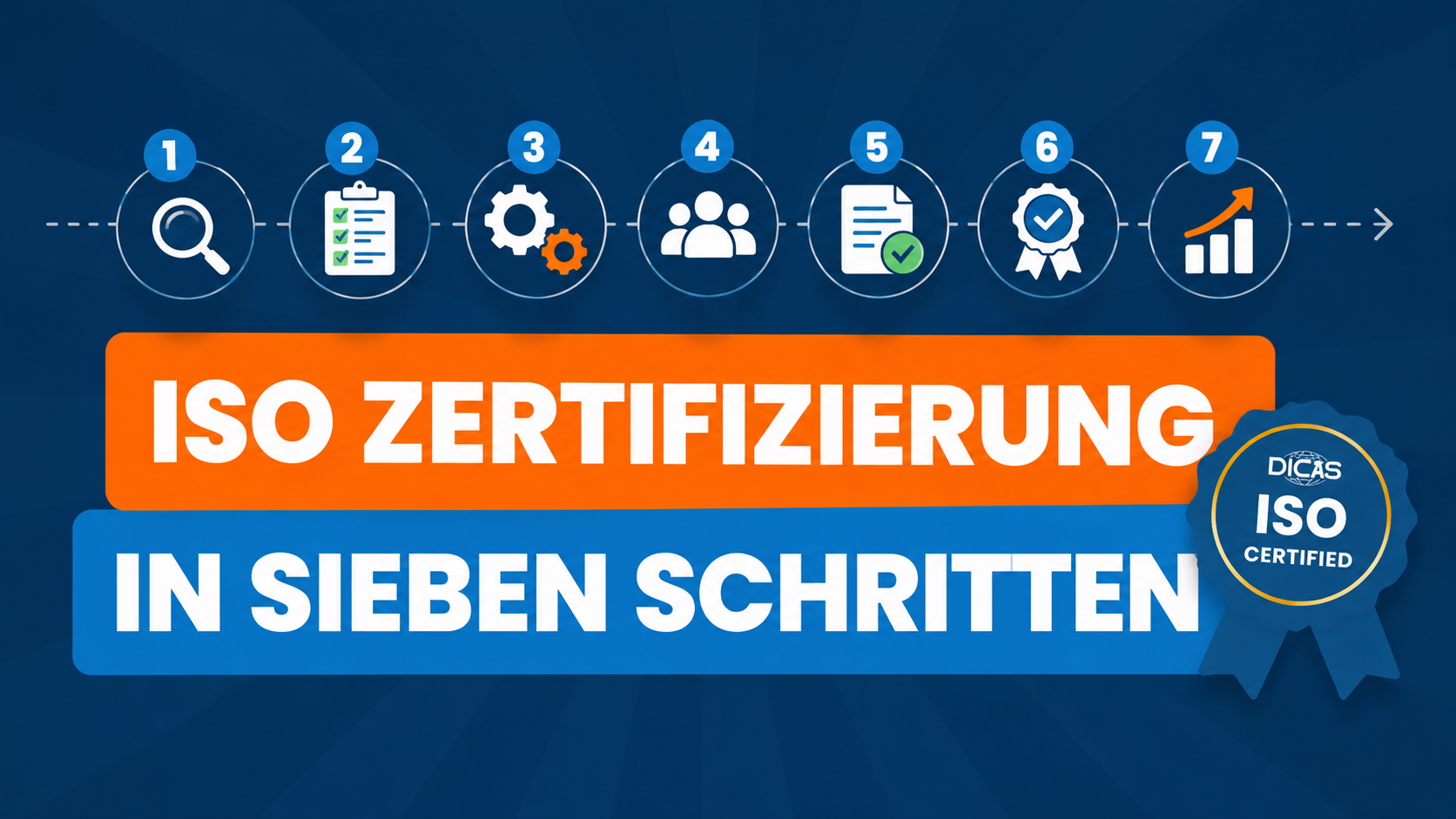
ISO 9001 includes more than 300 requirements for companies – it’s easy to lose track and get bogged down. That’s why we have divided the implementation into seven simple, logically structured steps. You will get to know these in this video.
What do I need to implement in Chapter 4 of ISO 9001?
Chapter 4 is about understanding your company and your position in the market. You analyze what influences your company – for example, customers, competition, or legal requirements. This doesn’t have to be a complicated analysis; it should be done in a practical way. The following questions will help you.
- Are you familiar with the topics you have to deal with regularly? (e.g., customer needs, legal requirements, or technological trends)
- Do you have a list of interested parties who pursue specific interests in relation to your organization? (e.g., employees, works council, customers, owners, environmental organizations, or similar)
- Have you defined the scope of your quality management system?
- Have you listed the processes and procedures for which ISO 9001 should apply?
What does leadership specifically mean in ISO 9001?
You implement Chapter 6 simply by considering three things: Where do you want to go with your company in terms of quality? What can go wrong? And where are there opportunities to get better? From this, you derive clear goals and simple measures that you can implement in everyday life.
Anyone who wants to achieve something sets goals and weighs risks against opportunities. That is the core of Chapter 6.
- Have you defined measures for dealing with risks and opportunities?
- Have you established quality objectives?
- Have you established a procedure for handling changes?
In our interactive tool, you can implement the requirements of this chapter quickly and easily.
What does Chapter 7 Support mean?
Chapter 7 requires you to ensure that your company has the right conditions to do good work. This includes sufficient time, clear information, suitable tools, and employees who know what they are doing. The goal is for everyone in the company to be able to perform their tasks reliably and without obstacles.
When companies receive orders, they must ensure that they can also process them. Chapter seven is about resource planning and a company’s knowledge.
- Do you plan the necessary resources for the execution of your orders?
- Do you ensure that employees receive the necessary knowledge at the right time?
- Do you have the necessary infrastructure (production facilities, business premises, etc.)?
With our interactive ISO 9001 tool, you can implement the requirements quickly and easily.
What does the auditor check in Chapter 8?
In Chapter 8, the auditor checks how an order specifically runs through your company – from order receipt to completion. They look at whether your processes are clearly regulated and function reliably. The decisive question is: How well is your daily business organized and is it implemented that way?
ISO 9001 Chapter 8 deals with operational planning and control. It is the transition from theory to practice.
- Have you defined products and services so precisely that everyone knows what to do?
- Have you defined release processes before delivery to customers or the provision of a service?
- Are there plans and procedures for disruptions and breakdowns?
How much effort is the implementation of Chapter 9 really?
The implementation of ISO 9001 Chapter 9 is less effort than it sounds. It’s about keeping an eye on the success of your quality management and thus your company. You regularly check results, measure customer satisfaction, and draw an internal balance as management. The goal is that good results are not a coincidence.
The central question that Chapter 9 addresses is: How can you ensure that you really achieve the goals you have defined?
- How do you monitor performance?
- Do you conduct internal audits and controls?
- Do you regularly assess whether you have achieved your goals?
What does continuous improvement (ISO 9001 Chapter 10) specifically mean?
ISO 9001 Chapter 10 is the chapter that really defines successful entrepreneurship. It’s about continuously improving your company. You learn from mistakes, optimize your workflows, and further develop your processes. The goal is to become permanently better than the competition and to improve step by step.
Companies and organizations that work according to ISO 9001 pursue the ambition of constantly improving. That’s what it’s about.
- Can you ensure that you learn from mistakes (which can always happen)?
- Have you established a process for continuous improvement?
Which steps are really necessary for ISO 9001?
For ISO 9001, you don’t need complicated steps. The decisive factors are: understanding the company, setting goals, defining processes, creating documents, assessing risks, checking results, and implementing improvements. If you approach these steps clearly and practically, the standard can be implemented simply and in a structured manner.
 With a clearly guided, digital approach, you can implement these steps directly – structured, traceable, and without unnecessary detours.