ISO management systems: More than just a certificate
Many companies view ISO management systems primarily as a formal obligation or a bureaucratic hurdle—a certificate to hang on the wall to meet customer requirements. However, this understanding falls short and misses the true strength of a professional management system. Because it is not primarily about the certificate. It is about structure, clarity, and above all: about relief in everyday business life.
Why ISO management systems?
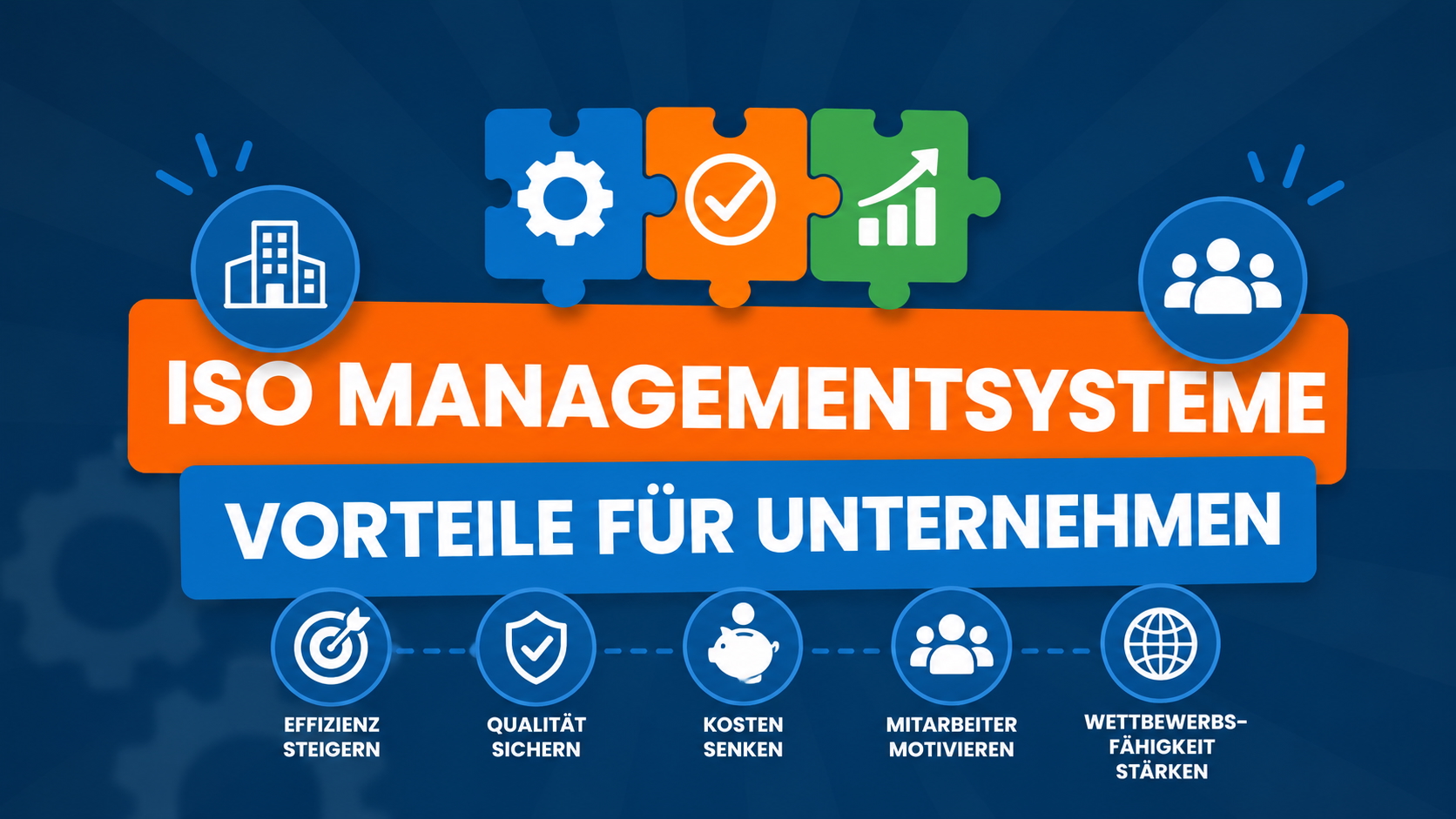
ISO management systems—whether for quality (ISO 9001), environment (ISO 14001), or information security (ISO 27001)—help management organize the company better. They create a framework in which processes can be designed meaningfully, responsibilities clearly assigned, and improvements specifically implemented. The result: less operational hectic, less duplication of work, and less uncertainty in daily business.
Benefit 1: More order—clear processes and responsibilities
Who is responsible for what? What happens if something goes wrong? And what does our standard process actually look like? In many companies, these questions remain unanswered—until a problem arises. An ISO management system ensures that processes are documented, roles are defined, and workflows are standardized. This does not mean that everything becomes rigid and inflexible. On the contrary: clear rules create room for innovation because no one has to argue about the basics anymore.
Benefit 2: Less chaos—no flying blind, no duplication of work
In companies without systematic workflows, much happens twice or contradictorily. Information is handed over incorrectly, important tasks are forgotten, or handled by several people at the same time. This leads to frustration, errors, and inefficiency. An ISO system creates a common structure that everyone can rely on. It reduces wrong decisions and ensures that information is available at the right time and in the right place.
Benefit 3: More time for the essentials—strategic instead of reactive
Especially for managing directors of small and medium-sized enterprises, everyday life can become a pure reaction mode: emails, inquiries, problems, decisions—all at once. A lived-in management system provides relief because it creates routine. When daily business doesn’t have to be reinvented every day, more time remains for what really counts: vision, strategy, development.
Every ISO management system brings its own added value
ISO management systems are not an end in themselves. Each one brings specific benefits that go far beyond pure certification:
- ISO 9001—the quality management system—ensures that processes are aligned with customer needs and continuously improved. It helps to make quality measurable and to systematically eliminate sources of error. Those who live ISO 9001 reduce complaints, increase customer satisfaction, and boost efficiency.
- ISO 14001—the environmental management system—enables companies to identify, evaluate, and improve their environmental impact. It creates transparency regarding resource consumption, emissions, and disposal routes—and helps to save costs and meet legal requirements. Environmental management thus becomes a strategic success factor.
- ISO 27001—the information security management system—adds structure and routine to a topic that has become overwhelming for many companies: the protection of information. The standard helps to identify risks, take appropriate measures, and clarify responsibilities. Information security thus becomes tangible, understandable, and anchored in everyday life.
ISO is not an obstacle—it is an opportunity
The idea that ISO management systems are complicated, time-consuming, or only intended for large corporations persists stubbornly. But it is wrong. Small and medium-sized enterprises in particular benefit from the clarity, structure, and security that ISO systems offer. And today, they can implement these systems more easily and quickly than ever before using digital tools.
An ISO certificate is not the goal. It is the visible sign that a company works systematically—for the benefit of customers, the environment, information security, and above all: for the benefit of its own organization.
Those who understand management systems correctly and use them in a practical way win. In order, in time, and in future viability.